
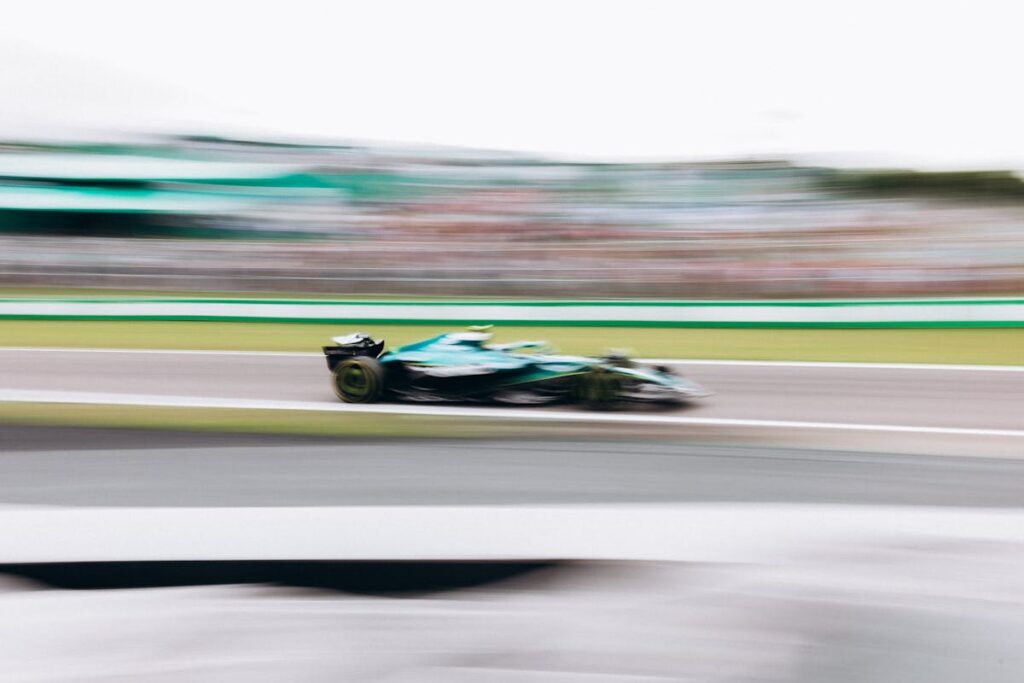
Formula 1 has seen plenty of regulation cycles over the decades, but 2026 is different. This isn’t a tweak to the aerodynamic rulebook or a minor power unit revision — it’s a ground-up reinvention of what an F1 car is, how it’s powered, and who gets to build one. And it’s already underway: the season kicks off in Melbourne on March 16, with 11 teams and 22 drivers racing machinery that looks and sounds unlike anything that’s come before.
Smaller, lighter, wilder
The 2026 cars are noticeably more compact than their predecessors. F1 trimmed the wheelbase and reduced overall dimensions, partly to improve racing on tighter circuits but also to offset the additional weight of the new hybrid systems. The bodywork philosophy has shifted too — away from the ground effect dominance of recent years toward a concept called active aerodynamics.
This is the headline technical story of 2026: the cars now feature moveable aerodynamic surfaces that adjust their position depending on whether the car is in a straight line or cornering. On the straights, the wings flatten dramatically to reduce drag; in the corners, they pitch back up to generate downforce. The idea is to make overtaking easier without needing DRS as a crutch — the system effectively replaces it. Whether it delivers cleaner racing in practice is one of the most watched questions of the new era.
The power unit revolution
Under the bodywork, the changes are even more profound. F1’s new power unit regulations shift the energy split to roughly 50/50 between the internal combustion engine and electrical power — a massive jump from the roughly 20% electrical contribution of the previous hybrid formula. The ICE itself runs on 100% sustainable fuel, a significant step toward F1’s stated sustainability goals.
Three manufacturers supply engines in 2026: Ferrari, Mercedes, and Honda (returning under their own name after previously supplying Red Bull via RBPT). Renault exited at the end of 2025, a significant departure for a brand that’s been part of the sport for decades. Audi, meanwhile, is building toward a customer supply role but isn’t yet providing power to any team this season.
Eleven teams, one new face
The constructor lineup has expanded. Cadillac makes its debut as F1’s 11th team — the first American constructor to enter the championship in decades — after a protracted regulatory battle that tested the sport’s openness to new entrants. Their arrival brings genuine novelty and a significant marketing story, even if expectations for year-one competitiveness are measured.
At the other end of the paddock’s history books, Sauber has completed its transition into Audi. The Swiss team, which has operated under various names since 1993, now carries the Audi identity as the German manufacturer builds toward a full works programme. It’s a long game, and 2026 is the opening move.
Lando Norris defends his title
Walking into this new era as the reigning world champion is Lando Norris. The McLaren driver claimed his first title in 2025, ending a years-long wait and confirming what many had suspected for some time — that he had the pace and the racecraft to win, and only needed the machinery to match. McLaren arrives in 2026 as arguably the benchmark against which others will be measured, though the wholesale regulation change means last year’s competitive order offers little guarantee of what comes next.
Max Verstappen remains at Red Bull, hunting a fifth championship. Lewis Hamilton has made the move that dominated the off-season conversation for over a year, joining Ferrari in what may be the final major chapter of his career. Charles Leclerc, suddenly sharing a garage with the most decorated driver in the sport’s history, has something to prove. The driver market reshuffled significantly heading into the new rules, and narratives are everywhere.
An open and unpredictable season
The honest answer is that no one quite knows how the 2026 pecking order will shake out. New regulations historically scramble the competitive hierarchy — sometimes the dominant team adapts best, sometimes a dark horse emerges. With a genuinely new power unit formula, active aero, a new constructor, and a reshaped engine supplier landscape, the variables are stacked unusually high.
The active aerodynamics will be scrutinised from race one. The Cadillac debut will draw its own coverage arc. And somewhere in all of that, 22 drivers will be trying to win races in cars they’ve had limited time to truly understand. That uncertainty — paired with genuinely radical machinery — is what makes 2026 the most interesting season F1 has produced in a long time.
Key Takeaways
- The 2026 cars feature active aerodynamics — moveable wing surfaces that replace DRS for overtaking.
- Power units now split energy equally between the combustion engine and electrical systems — a fundamental shift.
- Cadillac joins as the 11th team; Sauber rebrands as Audi to begin its works programme.
- Lando Norris enters the season as defending world champion with McLaren.
- Lewis Hamilton joins Ferrari alongside Charles Leclerc, while Verstappen continues his title hunt at Red Bull.
Photo: Jonathan Borba via Pexels