
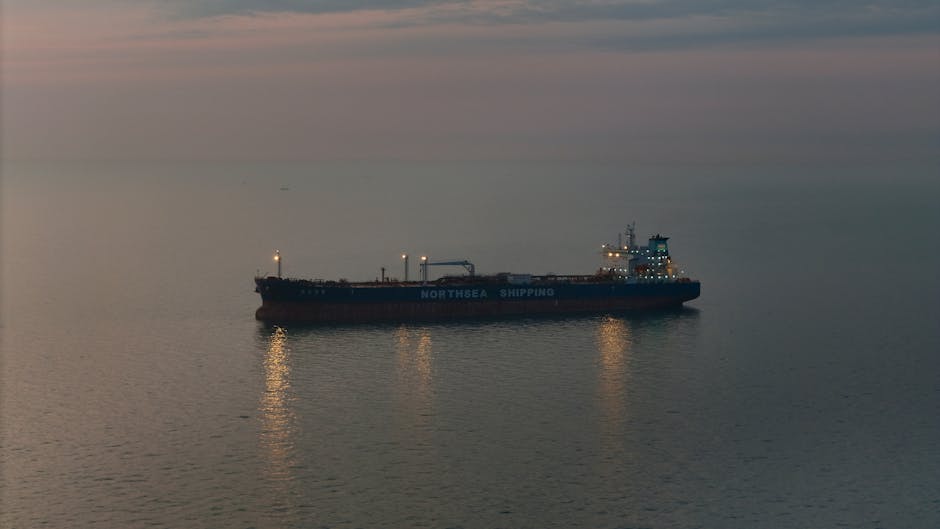
When the United States and Israel launched strikes on Iran on February 28, 2026 — dubbed Operation Epic Fury — the stated goal was to neutralize Iran’s nuclear ambitions. But the conflict has produced a massive, largely unintended consequence: it has handed Vladimir Putin one of his greatest strategic windfalls since Russia began its full-scale invasion of Ukraine in 2022. Russia’s oil revenues have roughly doubled, Western munitions stockpiles are being consumed in the Persian Gulf instead of Eastern Europe, and the diplomatic pressure on Moscow has evaporated almost overnight.
The connections between the war in the Middle East and the war in Ukraine are not coincidental — they are structural. The following is a deep-dive into how the Iran conflict is reshaping the battlefield in Ukraine, based on analysis from the Carnegie Endowment, the Kyiv School of Economics, the Foreign Policy Research Institute, PIIE, and major news outlets including Bloomberg, Reuters, and the Financial Times.
Russia’s Oil Revenues Doubled Almost Overnight
Before Operation Epic Fury, Russia’s economy was in serious trouble. Oil and gas revenues in 2025 had fallen to their lowest level since 2020, down 24% year-on-year. Russian Urals crude had collapsed to $40–45 per barrel — far below the $59 per barrel Russia needed to balance its budget. The Kremlin was already planning significant spending cuts.
Then the Strait of Hormuz effectively closed and Qatar declared force majeure on LNG exports. Brent crude surged 18% within the first week of strikes, eventually breaking past $120 per barrel. The discount on Russian Urals crude — which buyers had been demanding as a penalty for sanctions risk — collapsed from $25 to under $5 as desperate Asian refiners scrambled for non-Gulf supply. Bloomberg reported that Russian oil export revenues hit $2.48 billion per week, the highest since April 2022 and up 120% from pre-war levels. The Kyiv School of Economics projected Russia’s total energy revenues could surge from $158 billion in 2025 to as much as $304 billion in 2026 if the conflict drags on and sanctions enforcement remains weak.
Making matters worse, the US Treasury issued general licenses in early March that effectively suspended enforcement of oil sanctions against Russia-linked shadow fleet tankers, releasing an estimated 120–125 million barrels of Russian crude onto the market. The Council on Foreign Relations put it plainly: “The Trump administration claims to be pressuring Russia to reach a peace deal with Ukraine, but it has now handed Moscow a financial lifeline the Kremlin can use to prolong the war.” Russia responded by dropping its planned budget cuts and increasing military spending, with defence already consuming roughly 40% of federal expenditure.
More Patriot Missiles in Four Days Than Ukraine Got in Four Years
The military diversion from Ukraine has been equally staggering. In just the first days of the Iran war, Middle Eastern countries and Israel fired more than 800 Patriot interceptor missiles — compared to roughly 600 PAC-3 missiles Ukraine received across four entire years of Russia’s full-scale invasion. Former NATO Deputy Supreme Allied Commander Sir Richard Shirreff was blunt: “The Americans fired off something like four times as many Patriot missiles in the first four days as they’ve supplied Ukraine in four years.”
The wider weapons consumption is alarming. RUSI estimated the US spent nearly 40% of its THAAD interceptor stockpile in just 16 days. Over 850 Tomahawk cruise missiles were fired in four weeks, against annual procurement of just 57. In late March, the Washington Post reported the Pentagon was actively considering redirecting approximately $750 million in NATO-contributed funds — which have supplied roughly 75% of Ukraine’s Patriot missiles — to replenish US stockpiles instead. Ukraine, which already faces a severe shortage of air-defence interceptors, is now competing for those systems with well-funded Gulf states and the US military itself.
Peace Talks Shelved, Alliance Fractures Deepen
The diplomatic consequences for Ukraine have been equally damaging. On March 19, Kremlin spokesman Dmitry Peskov confirmed that the trilateral US-Russia-Ukraine peace talks — held three times in 2026 in Abu Dhabi and Geneva — were on “a situational pause.” Russia has little incentive to resume: the longer the pause, the more territory it can consolidate in Ukraine and the more oil revenue it accumulates.
The Iran war has also driven a sharp wedge through the transatlantic alliance. Spain closed its airspace to US military flights. France and Italy refused basing rights. Trump reportedly discussed withdrawing from NATO with advisers. This fracturing benefits Moscow directly: Europe is now divided over both Ukraine support and the Iran operation, making a unified Western response harder to sustain. Meanwhile, Washington Post reporting confirmed Russia was providing Iran with real-time satellite intelligence on US and Israeli military positions — a covert contribution that stopped well short of a military alliance but clearly served mutual interests.
Ukraine Strikes Back — and Pivots to the Gulf
Ukraine has not been passive. In late March 2026, Ukrainian forces launched an unprecedented campaign of five major drone strikes in ten days against Russia’s two largest Baltic Sea oil export terminals: Ust-Luga and Primorsk. The results were dramatic: Reuters calculated that at least 40% of Russia’s total oil export capacity — approximately 2 million barrels per day — was temporarily halted, described as “the most severe oil supply disruption in modern Russian history.” Bloomberg estimated the strikes cost Russia at least $1 billion in oil revenue in a single week.
At the same time, President Zelensky conducted a Gulf diplomatic tour in late March, signing 10-year defence cooperation agreements with Saudi Arabia, Qatar, and the UAE. The pitch was smart: Ukraine positioned itself not as an aid recipient but as a battle-tested security partner, offering drone interception expertise and electronic warfare know-how in exchange for PAC-3 missiles, diesel, and co-production deals. Over 200 Ukrainian drone specialists were already deployed across the Gulf by mid-March. Complicating the picture, however, Hungary’s Viktor Orbán has continued blocking Ukraine’s €90 billion EU loan package — using a pipeline dispute as leverage ahead of Hungary’s April 12 elections — leaving Ukraine’s longer-term financing in serious jeopardy.
Key Takeaways
- The US-Israel war on Iran has handed Russia a massive oil revenue windfall — revenues could nearly double in 2026 — directly funding its war in Ukraine.
- US sanctions on Russian oil were temporarily relaxed to stabilise global energy markets, further enriching Moscow at the worst possible moment for Kyiv.
- The Middle East conflict is consuming Western air-defence stockpiles at a rate Ukraine cannot afford to compete with — more Patriot missiles were fired in four days than Ukraine received in four years.
- Russia has used the diplomatic chaos to suspend Ukraine peace talks indefinitely, with no scheduled resumption.
- Ukraine is fighting back by striking Russian oil export ports and building new alliances in the Gulf, but the structural disadvantage created by the Iran conflict is severe and ongoing.
For a more detailed look at the military situation on the ground in Ukraine — including the drone campaigns, Russian offensive patterns, and the campaign season dynamics — watch this recent in-depth video analysis by Perun:
Perun — Russia’s Next Offensive & Ukraine’s Energy War
Photo: Chengxin Zhao via Pexels