
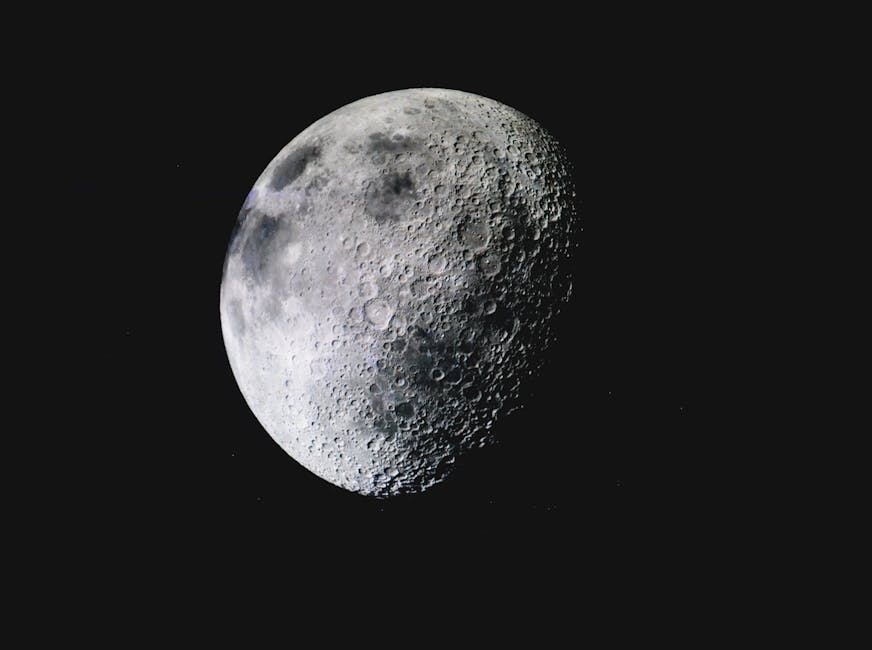
For the first time in more than half a century, humans are on their way to the Moon. NASA’s Artemis II mission lifted off on April 1, 2026, from Kennedy Space Center in Florida, marking one of the most significant milestones in spaceflight history. The last time astronauts ventured this far from Earth was during Apollo 17 in December 1972 — a moment that defined a generation. Now, more than 50 years later, a new crew is writing the next chapter.
The mission carries four astronauts aboard the Orion spacecraft, perched atop NASA’s Space Launch System — the most powerful rocket ever to carry humans. It is a 10-day test flight around the Moon and back, with no landing planned. But make no mistake: this is far more than a rehearsal. Artemis II is the critical stepping stone toward returning boots to the lunar surface, and eventually, pushing humanity further into deep space.
The Crew Making History
Commander Reid Wiseman leads a crew that breaks barriers on multiple fronts. Pilot Victor Glover is the first person of color to travel beyond low Earth orbit. Mission Specialist Christina Koch is the first woman to journey toward the Moon. And Canadian Space Agency astronaut Jeremy Hansen is the first non-American to be part of a lunar mission crew. Before launch, Hansen summed it up simply: “We fly for all of humanity.”
The launch itself was not without drama. Ten minutes before liftoff, the countdown was briefly halted due to a data anomaly. Engineers quickly cleared it, and at 6:35 p.m. EDT — 00:35 CEST — the twin solid rocket boosters ignited, generating 8.8 million pounds of thrust and pushing the 5.75-million-pound rocket off the pad. Within minutes, Orion reached orbit. Commander Wiseman radioed back just five minutes after launch: “We have a beautiful moonrise — we’re flying right toward it.”
Europe at the Heart of It
What makes Artemis II particularly remarkable is that for the first time, NASA is relying on a non-American system for a critical part of a crewed lunar mission. The European Service Module — built by Airbus in Bremen, Germany, with components from eleven European countries — provides propulsion, power, water, and oxygen for the Orion crew capsule. Without it, the mission simply would not fly. Germany’s DLR research center also contributed four radiation detectors measuring cosmic ray exposure between Earth and Moon, and a German CubeSat from Berlin startup Neurospace is hitching a ride.
It is a powerful signal: humanity’s return to the Moon is a global effort, not a national race.
What Happens Around the Moon
After spending roughly 25 hours in Earth orbit running system checks, the European Service Module’s main engine fired to break free of Earth’s gravity and set Orion on a free-return trajectory — the same type of path used by Apollo 8 in 1968. The Moon’s gravity will arc the spacecraft around the far side and sling it back toward Earth, no additional engine burns required.
At their furthest point, the four astronauts will be approximately 400,000 kilometres from Earth — farther than any human has ever traveled. The crew will photograph the lunar surface, conduct a laser communication test, and scout the Moon’s south pole — the target for the Artemis IV landing planned for 2028. They will also experience a 53-minute solar eclipse as the Moon passes between Orion and the Sun, an hour after witnessing Earthrise from the lunar far side.
The Road Ahead
Artemis II is designed to prove that Orion and SLS can safely carry astronauts to and from the Moon. If successful, it clears the path for Artemis III in 2027, which will test rendezvous and docking with commercial lunar landers — including SpaceX’s Starship HLS and Blue Origin’s Blue Moon. Artemis IV, targeting 2028, aims to land humans on the lunar south pole for the first time in history.
The splashdown in the Pacific Ocean is expected around April 11. After that, the data gathered — on radiation, life support, communications, and spacecraft handling — will shape every mission that follows. As Commander Wiseman put it after launch: “Artemis II is that first little teeny tiny curb that we stepped up on, on this really long journey.”
Key Takeaways
- Artemis II launched April 1, 2026 — the first crewed lunar mission in over 50 years.
- Four astronauts including the first woman and first person of color to travel toward the Moon.
- The European Service Module, built in Bremen, is the first non-US system to power a crewed lunar flight.
- No Moon landing this time — this is a 10-day test flight around the Moon and back.
- Splashdown is expected around April 11, paving the way for a lunar landing in 2028.
Photo: ViCky SiNgh via Pexels