
On 30 March 2026, Airbus Defence and Space completed the first demonstration flight of a system that may signal a genuine shift in how militaries deal with cheap attack drones. The Bird of Prey — an uncrewed interceptor drone — autonomously hunted down a simulated kamikaze drone in northern Germany, engaging it with a miniature guided missile. No pilot, no ground-based radar lock, no command from a control centre. Just a machine finding and killing another machine in the air.
The test may sound like science fiction, but it is the product of nine months of engineering — and it addresses one of the most pressing tactical problems of the current era: how do you stop hundreds of cheap attack drones without spending more money on the defence than the attacker spent on the offence?
The Bird of Prey Platform
The Bird of Prey is built on a modified version of the Airbus Do-DT25, a jet-powered drone originally developed as an aerial target for short-range missile training. In its new interceptor role, the prototype has a wingspan of 2.5 metres, a length of 3.1 metres, and a maximum take-off weight of 160 kg. It is catapult-launched, meaning no runway is required — a significant advantage for mobile forward deployments near a frontline.
In the demonstration, the drone autonomously searched for, detected, and classified a medium-sized one-way attack drone before launching one of its missiles. The engagement sequence ran without human input. The prototype carried four missiles in the test; the planned operational version will carry up to eight, allowing a single sortie to engage multiple threats.
Bird of Prey is designed to plug into NATO’s existing air defence infrastructure via Airbus’s Integrated Battle Management System (IBMS), meaning it can be directed by existing command-and-control networks rather than requiring a separate dedicated system.
The Frankenburg Mark I Missile
The weapon fired from the Bird of Prey is the Mark I, developed by Estonian defence startup Frankenburg Technologies. At 65 centimetres long and under 2 kilograms, it is described as the lightest guided interceptor missile ever built — roughly the size of a baguette. It is powered by a solid-fuel rocket motor, reaches high-subsonic speeds exceeding 1,000 km/h, and uses an electro-optical seeker to guide itself autonomously onto the target. A fragmentation warhead detonates by proximity fuse within one to two metres of the drone.
The missile’s engagement range from a ground launcher is up to 2 km, at altitudes up to around 1,500 metres. When launched from the air — as in the Bird of Prey configuration — both range and altitude capability increase substantially, addressing one of the key limitations of the ground-based version. The Mark I is effective against propeller-driven drones flying at 150–200 km/h, as well as faster jet-powered UAVs in the 400–650 km/h range.
Frankenburg positions the missile at roughly one-tenth the cost of a conventional Stinger interceptor, and plans to manufacture it at a rate of up to 100 units per day. Poland’s state defence group PGZ has already signed a cooperation agreement for a production facility, underlining the broader eastern-flank logic of regional stockpile resilience.
Why This Matters Now
The wars in Ukraine and the Middle East have exposed a painful asymmetry: Russia produces attack drones costing a few thousand dollars apiece, while the interceptors used against them can cost hundreds of thousands. At launch rates of 500–700 drones in a single day — figures reported during 2025 — even well-stocked air defence systems struggle to maintain a viable cost balance. The Bird of Prey and Mark I combination is a direct attempt to close that gap.
The system is not a replacement for high-end air defence platforms like IRIS-T or Patriot. It is designed for the lower tier of the threat spectrum — the mass-produced, propeller-driven kamikaze drones that have become a daily fact of life near any active frontline. By handling that tier cheaply and at scale, it frees up premium interceptors for cruise missiles and fast jets.
Airbus and Frankenburg plan additional test flights with a live warhead throughout 2026. The official Airbus press release is available here, and the demo flight video can be viewed here.
Key Takeaways
- The Bird of Prey completed its first demo flight on 30 March 2026, autonomously intercepting a simulated kamikaze drone without human input.
- The platform is catapult-launched, jet-powered, reusable, and can carry up to eight Mark I missiles in its operational version.
- The Frankenburg Mark I is the world’s smallest guided interceptor missile — 65 cm, under 2 kg, and priced at roughly one-tenth of a conventional SHORAD missile.
- The system is designed for mass production at scale, specifically to counter the cost asymmetry created by cheap attack drones.
- Further live-warhead tests are planned throughout 2026 ahead of demonstrations to potential customers.
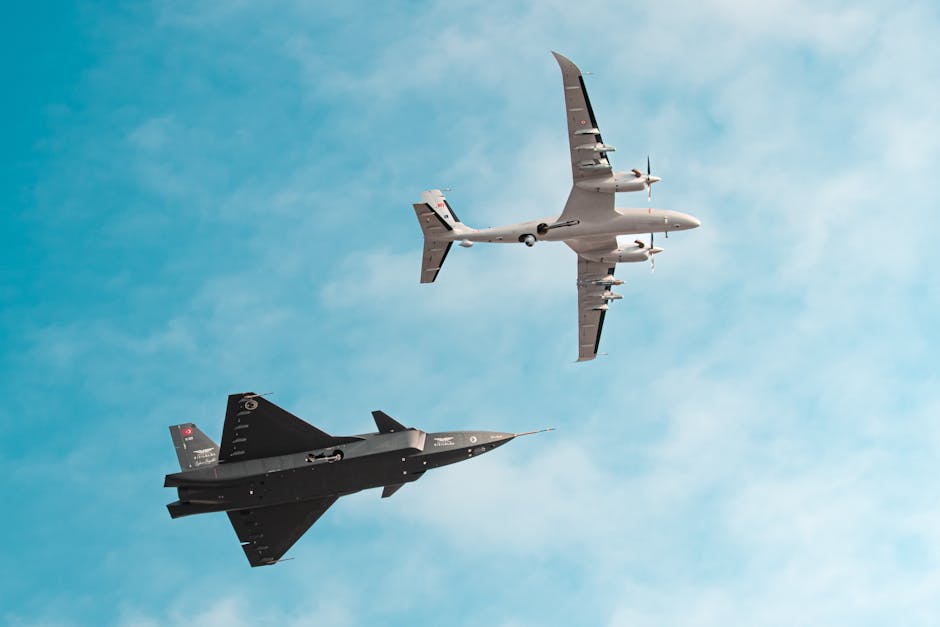
Symbolic image, not from the actual test. Photo: Emrah Aslantepe via Pexels