
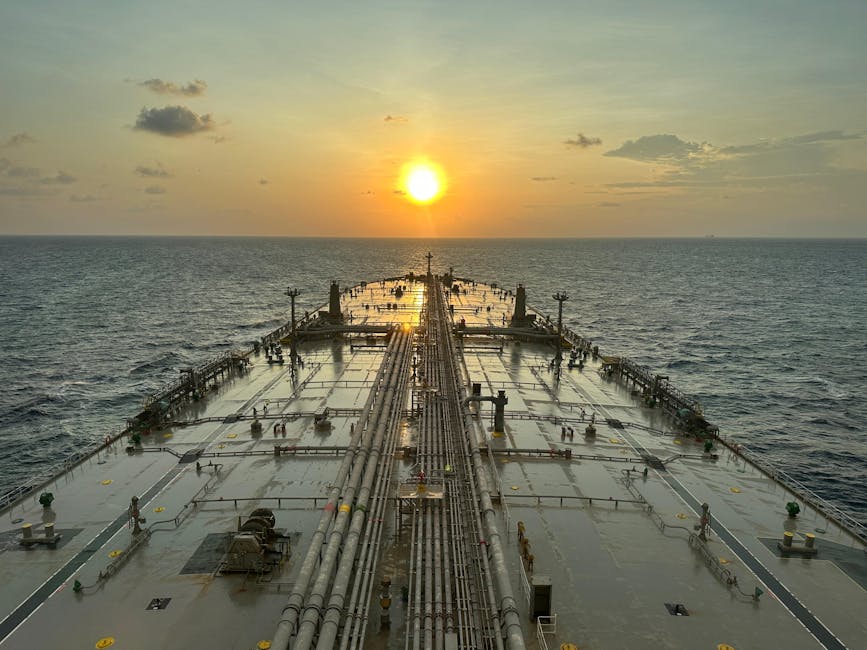
For over a month, one of the world’s most critical energy corridors has been effectively shut down. The Strait of Hormuz — a narrow passage between Iran and Oman through which roughly a quarter of the world’s seaborne oil flows — has seen ship traffic collapse by 95% since late February 2026. What began as a military escalation in the Middle East is now sending shockwaves through energy markets, global trade, and the finances of developing nations worldwide.
On 28 February 2026, US and Israeli military operations against Iran triggered an almost immediate halt to commercial shipping through the Strait. According to a rapid assessment published on 1 April 2026 by UN Trade and Development (UNCTAD), daily ship transits fell from an average of 129 in February to just 6 in March — the equivalent of one and a half days of normal traffic passing through in an entire month.

Source: UN Trade and Development (UNCTAD), based on data provided by Clarksons Research Shipping Intelligence Network. Strait of Hormuz Disruptions: Growth and Financial Implications, 1 April 2026.
Fuel Prices Have Surged
The immediate consequence has been a sharp rise in crude oil prices across all major benchmarks. Brent crude climbed from $75 to $110 per barrel, while Middle East Dubai crude spiked to $126 — an increase of more than 65% in a matter of weeks. The cost of physically transporting oil has also roughly doubled: the Baltic Exchange Dirty Tanker Index rose to 188 and the Clean Tanker Index to 215, using 27 February as a baseline of 100.
These are not abstract financial figures. Higher fuel costs feed directly into the price of producing and moving goods across every sector of the global economy. As UNCTAD’s data shows, when oil prices spike, inflation reliably follows — in both developed and developing countries.

Source: UN Trade and Development (UNCTAD), based on LSEG Data & Analytics. Strait of Hormuz Disruptions: Growth and Financial Implications, 1 April 2026.
Trade and Growth Slowing Down
UNCTAD projects that global merchandise trade growth will decelerate sharply, from an estimated 4.7% in 2025 to between 1.5% and 2.5% in 2026. World GDP growth is forecast to ease from 2.9% to 2.6%, with developed economies expected to grow at just 1.5%. The disruption is described as a major supply shock — pushing prices up while simultaneously weighing on demand and investment.
The geopolitical risk index, which tracks media attention to adverse geopolitical events, has reached its highest recorded level — surpassing even the spike seen at the onset of the war in Ukraine in 2022. This kind of uncertainty discourages investment and compounds the economic damage beyond energy markets alone.
Developing Countries Bear the Burden
The financial fallout is hitting developing nations particularly hard. Since the escalation began, currencies have weakened against the US dollar across Africa (−2.9%), Latin America and the Caribbean (−2.3%), and developing Asia and Oceania (−1.0%). Stock markets have declined sharply, and sovereign bond yields have risen, making it more expensive for these governments to borrow internationally — with Africa now paying 8.31% on external sovereign bonds, up 0.64 percentage points since late February.
This comes on top of a pre-existing debt crisis. According to UNCTAD’s figures, 3.4 billion people already live in 46 developing countries that spend more on servicing their debt than on health or education combined. Rising energy costs and tightening financial conditions risk pushing many of these countries toward a wider debt crisis.
Even in an optimistic scenario where the conflict ends soon, the supply chain disruption will take considerable time to unwind. The scale of the closure — over 30 days and counting — means that recovery will be measured in months, not weeks.
Key Takeaways
- Ship transits through the Strait of Hormuz collapsed 95% in March 2026, averaging just 6 per day versus 129 in February.
- Crude oil prices have risen 50–65% since the military escalation on 28 February; tanker freight rates have more than doubled.
- Global merchandise trade growth is projected to slow from 4.7% in 2025 to 1.5–2.5% in 2026; world GDP growth to 2.6%.
- Developing nations face a triple squeeze: weaker currencies, rising borrowing costs, and higher energy import bills — on top of existing debt burdens.
- Even a swift resolution to the conflict would leave supply chains disrupted for months, with price effects continuing well into 2026.
Further Information
Maritime shipping analyst Sal Mercogliano, host of the YouTube channel What’s Going on With Shipping?, has been tracking the situation in real time from open-source vessel tracking data. In his April 2nd update, he reported the first signs of ships attempting to break out of the Gulf through Omani waters — a potentially significant development if those vessels emerge safely in the Gulf of Oman. He also highlighted a troubling human dimension: US merchant mariners, including student cadets from the US Merchant Marine Academy, were left aboard ships in the Persian Gulf with minimal communication from or coordination with the US military.
UNCTAD’s full report, Strait of Hormuz Disruptions: Growth and Financial Implications, outlines four policy priorities: stabilizing price levels through targeted interventions, containing the transmission of systemic financial risk, enabling rapid access to external financing for developing countries, and empowering development banks to provide emergency loans. UN Secretary-General António Guterres has been unequivocal: the global economic impact, he stated, is increasingly devastating, and the war must end immediately.
Photo: via Pexels