
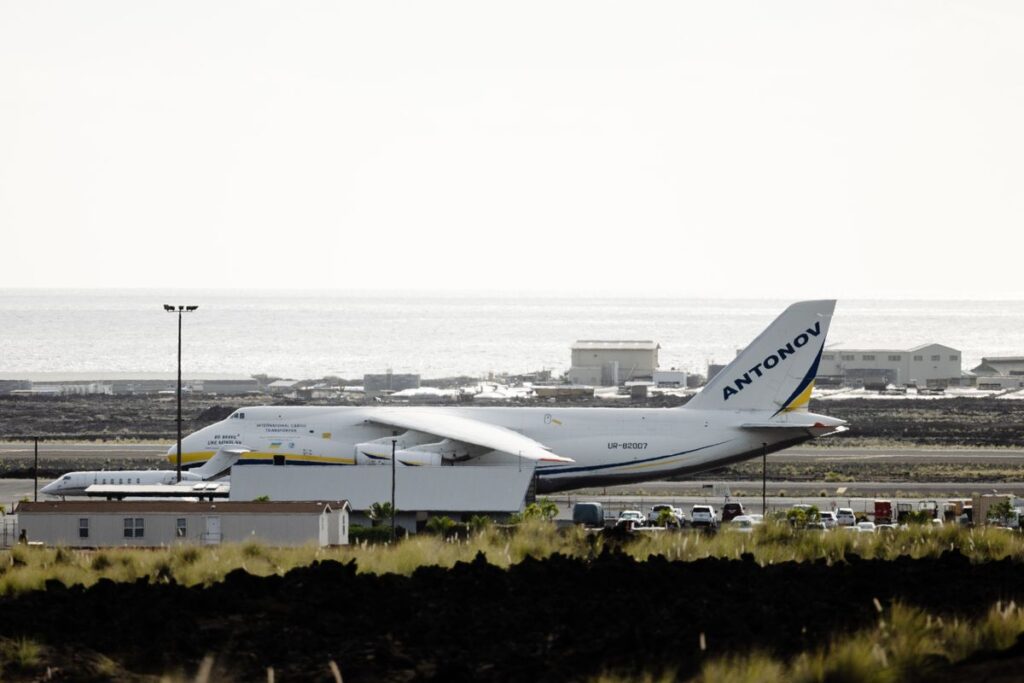
On the night of 4–5 August 2026, a small drone carrying an explosive device reached the secured cargo apron at Leipzig/Halle Airport and sat undetected for more than four hours next to parked Ukrainian Antonov Airlines aircraft. It did not go off. Germany’s Federal Prosecutor has since taken over the case, and more than a week later, key questions — including who was behind it — remain officially unanswered.
This piece separates what German authorities have confirmed from what has only been reported by German media citing unnamed "security circles," and places the incident in the wider context of suspected sabotage linked to the war in Ukraine.
What Happened at Leipzig
Flight operations were suspended around 23:40 local time on 4 August after a flying object was reported near the airfield. An airport employee found a drone carrying an explosive device in the secured cargo area, near parked Antonov An-124 heavy-lift freighters. Federal Police bomb-disposal specialists used a robot to examine the device and remove its detonator. The north runway reopened at 01:55; the south runway remained closed as a crime scene. On 6 August, Germany’s Federal Prosecutor (Generalbundesanwalt) assumed jurisdiction, citing "particular significance" — investigating attempted use of explosives and dangerous interference with air traffic. Separately, a DHL cargo aircraft that aborted its approach because of the closure struck an unidentified object while climbing out, roughly 400 meters up and a few kilometers from the airport. It diverted to Hannover with minor damage and landed safely. Authorities describe it as a collision with an object "allegedly a further drone" — no debris has been recovered, so whether this was a second, coordinated device remains open.
What Remains Unconfirmed
The device’s detonator was defective — officials say that failure is the only reason it did not explode. Beyond that, much of the detail in circulation is media-sourced, not official. Reports citing security circles describe roughly 800 grams of a Semtex/PETN mixture packed into a tin can, and a control system using mobile-network SIM cards rather than standard drone radio links. No prosecutor has confirmed the explosive type, quantity, or construction. Most consequential of all: Bild and Die Zeit report a DNA trace on the drone matching evidence from a 2024 incendiary-device attack on the same DHL hub — a claim German authorities have not confirmed or denied.
A Pattern Across Europe
Leipzig/Halle is simultaneously the world’s largest DHL Express hub, the relocated base of Ukraine’s Antonov An-124 fleet since 2022, and host to NATO’s contracted SALIS strategic airlift — a combination that makes it a plausible target independent of who is responsible. It sits within a documented pattern: a 2024 parcel-bomb campaign against DHL and DPD facilities in Germany, Poland and the UK, now on trial in Vilnius and attributed by Western investigators to Russia’s GRU; a November 2025 rail-sabotage incident in Poland that Warsaw attributed to Russian intelligence; and a UK arson case with a court-confirmed link to the Wagner Group. Research group IISS found attacks on European critical infrastructure rose sharply through 2024, though both IISS and CSIS note the pace slowed in 2025 even as individual incidents grew more severe. That pattern makes a state-linked reading of Leipzig plausible — it does not make it proven.
Protecting Civil Aviation
The four-hour dwell time is arguably the most important fact of the whole episode, regardless of attribution: something built to slip past detection sat inside a high-value airside for hours before a bus driver, not a defense system, found it. Germany amended its aviation security law in February 2026 to expand authority to shoot down threatening drones, and the EU published a counter-drone action plan the same month. Since Leipzig, Germany has announced doubling its drone-defense units and a new research center. But industry voices say detection hardware promised for major airports, including Leipzig/Halle, is still being installed — meaning the gap exposed on 4 August has not yet closed.
Key Takeaways
- An explosive-laden drone sat undetected for 4+ hours at Leipzig/Halle Airport before a faulty detonator — and a bus driver — stopped it becoming a serious incident.
- A separate object, possibly a second drone, struck a DHL cargo aircraft climbing out the same night; it diverted safely to Hannover, but no debris has been recovered to confirm what it was.
- No suspect has been named and Germany has not officially attributed the attack to any state.
- The most specific device details (explosive type, quantity, control method) and the DNA link to a 2024 attack come from media reports citing anonymous sources, not confirmed findings.
- The incident sits inside a broader, partly-documented pattern of suspected Russian-linked sabotage across Europe tied to support for Ukraine.
- Detection technology promised for major German airports is still being rolled out, more than a week after the incident exposed the gap.
Reporting first prompted by AeroNewsGermany’s coverage of the incident (in German). For the full sourcing, evidence-tagging, and broader hybrid-sabotage research behind this piece, see our detailed research report.
Photo: Josh Withers via Pexels. Note: this shows an Antonov An-124 at Kailua-Kona Airport, Hawaii — not the aircraft or airport involved in this incident.