
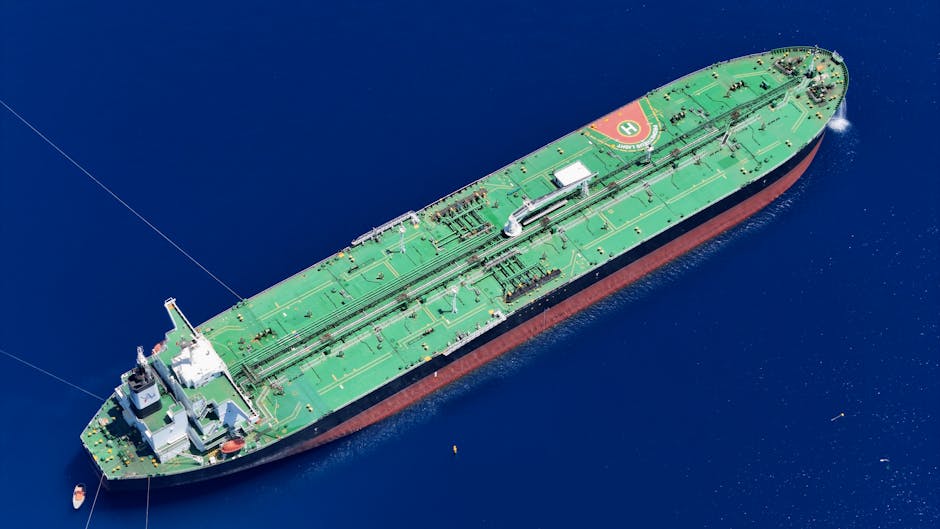
The radio call came in on Channel 16 — the international distress frequency every mariner monitors. The officer aboard the Indian supertanker Sanmar Herald was calm but urgent: “SA Navy, Sea Navy. This is Sanmar Herald. You gave me clearance to go. My name is second on your list. You gave me clearance to go. You are firing now. Let me turn back.” He turned back. Within hours, so did almost everyone else.
On April 17, 2026, both Iranian Foreign Minister Abbas Araghchi and US President Donald Trump declared the Strait of Hormuz “completely open” to commercial traffic during a fragile ceasefire window. For a few hours, it seemed like hundreds of vessels stranded in the Persian Gulf might finally move. They didn’t. What followed instead was one of the most revealing episodes of the entire Iran crisis — not just a story about ships, but about who is actually in charge in Tehran.
The Rush, the Shots, the Retreat
The moment Araghchi’s announcement broke, vessels that had been anchored for weeks began moving. Dark fleet tankers — ships flagged in obscure registries, carrying Iranian oil under falsified identities — led the charge. The Torin, the Guardian, and the Rain, all LPG tankers with documented links to Iran’s sanctioned shadow fleet, formed the vanguard of a dash for the strait’s exit. Cruise ships followed. Container vessels edged out of their anchorages. Marine traffic trackers showed a sudden surge of arrows pointing east.
Then the Islamic Revolutionary Guard Corps Navy showed up. Fast attack craft intercepted vessels transiting Iran’s imposed traffic corridor — the toll-lane route the IRGC had carved through its own territorial waters. The Sanmar Herald, a Very Large Crude Carrier loaded with two million barrels of Iraqi oil, was fired upon despite having received explicit clearance to proceed. A container ship reported damage from an unknown projectile off the Omani coast. A cruise ship reported a splash in close proximity. All four attacked vessels turned around. According to ISW analysis and maritime tracking data, at least nine vessels managed to exit the strait through Omani territorial waters during the brief window — mostly cruise ships navigating the southern route, away from Iran’s controlled corridor. The dark fleet tankers, for the most part, did not make it through.
By the morning of April 18, the IRGC Navy broadcast a blunt message: no vessel “of any type or nationality” was permitted to approach the strait. The opening had lasted less than 24 hours. Traffic through the world’s most important energy chokepoint had virtually halted again — except for Iranian vessels.
The IRGC vs. Its Own Foreign Minister
This is where the story gets more interesting than a shipping disruption. The Institute for the Study of War’s April 18 special report cuts to the core of what actually happened: the IRGC did not close the strait in response to the United States. It closed the strait in response to Araghchi.
According to ISW’s analysis, IRGC Commander Major General Ahmad Vahidi and his inner circle have spent weeks systematically consolidating control over not just Iran’s military response, but its diplomatic posture. When the Islamabad talks took place earlier in April, Vahidi attempted to insert a hardline IRGC loyalist, Mohammad Bagher Zolghadr, into the Iranian negotiating delegation — over the explicit objections of both Araghchi and Parliament Speaker Ghalibaf. The purpose was surveillance: to monitor whether the negotiators strayed from IRGC directives. When Araghchi reportedly showed flexibility on Iran’s support for its regional proxy network, Zolghadr complained to senior IRGC leaders. The delegation was recalled to Tehran.
The April 17 strait announcement appears to have been Araghchi acting at the outer edge of his authority — or beyond it. The IRGC’s response was swift and public. IRGC-affiliated media denounced the announcement. The Supreme National Security Council, whose secretary was appointed at Vahidi’s behest, issued a statement endorsing the re-closure. The Khatam ol Anbia Central Headquarters — functionally an IRGC body — formally justified the shutdown by citing the US naval blockade of Iranian ports, the same blockade that Araghchi’s announcement had implicitly moved to work around.
ISW’s conclusion is stark: the IRGC’s actions on April 18 served two simultaneous purposes. Externally, halting traffic through Hormuz drives up oil prices and shipping costs, squeezing the United States economically. Internally, it was a demonstration of dominance — the IRGC publicly overruling its own foreign minister and making clear to every faction within the Iranian regime who holds the real authority. Iran’s Supreme Leader Mojtaba Khamenei is reported to be seriously injured or incapacitated. In that vacuum, Vahidi has emerged as the most powerful figure in Tehran, and he intends everyone to know it.
The implications for diplomacy are serious. The United States is currently negotiating with Iranian political officials who, as ISW puts it, “do not have the authority to independently determine Iran’s negotiating positions.” Araghchi and Ghalibaf’s team reportedly could not have finalised any deal in Islamabad even if they had wanted to. Trump has set April 22 as a deadline for progress, but there is no framework agreed, no date set for further talks, and Iran’s deputy foreign minister has described US demands as “maximalist” — with the transfer of enriched uranium a “non-starter.” Meanwhile, the IRGC, the faction that can actually say yes or no, is not at the table.
Key Takeaways
- Iran’s Foreign Minister declared the Strait of Hormuz open on April 17 — the IRGC reversed that decision within hours by firing on commercial vessels, including the Indian supertanker Sanmar Herald, which had received explicit clearance to pass.
- Only a handful of vessels — mostly cruise ships using Omani waters — managed to exit during the brief window. Dark fleet tankers attempting the crossing were largely turned back by IRGC gunboats.
- According to ISW analysis, the IRGC’s actions were as much an internal power move as an external pressure tactic — a public overruling of Iran’s own foreign minister by the IRGC commander General Vahidi.
- Iran’s political negotiators appear to lack the authority to finalise any deal with the United States. The IRGC, which holds the real power, is not formally part of the negotiations.
- With Trump’s April 22 deadline approaching and no framework agreed, the Strait of Hormuz remains both a geopolitical flashpoint and a mirror of Iran’s deepening internal fracture.
Sources: ISW Iran Update Special Report, April 18, 2026 — Institute for the Study of War & Critical Threats Project. Escape From the Strait of Hormuz…Sort of! — What’s Going on With Shipping, April 18, 2026 (Sal Mercogliano).
Photo: DeLuca G via Pexels