
Earlier this season, this blog was critical of Formula 1’s new energy-conservation rules, arguing that drivers spending half a lap lifting and coasting to save power was draining the sport of genuine wheel-to-wheel racing. Three races later, it’s only fair to admit that the picture has changed for the better. The Canadian, Monaco and Spanish Grands Prix have delivered some of the most entertaining racing in years, and the tweaks made to the power unit rules deserve real credit for it.
Beyond the on-track product, this stretch of races has also produced two of the best storylines of the season: the emergence of a teenage prodigy at Mercedes, and a Ferrari team finally finding its footing with Lewis Hamilton leading the charge. Unfortunately, the same three races also exposed how badly F1’s penalty system can misfire, and how chaotically the sport handles the fallout when it does.
Antonelli’s Remarkable Title Charge
Kimi Antonelli has been the standout story of 2026. The 19-year-old Mercedes driver won a chaotic Canadian Grand Prix after a fierce early battle with team-mate George Russell ended in Russell’s retirement, then followed it up with a flawless pole-to-flag victory at Monaco, leading by close to 30 seconds before a late red flag for safety car incidents. That result made it five wins from the season’s first six races and moved Sky Sports commentators to describe him as a generational talent. Spain finally broke the streak, with a power unit failure four laps from home, but Antonelli still arrives at the summer break with a commanding championship lead and a reputation that now precedes him at every circuit.
Ferrari And Hamilton Rediscover Winning Form
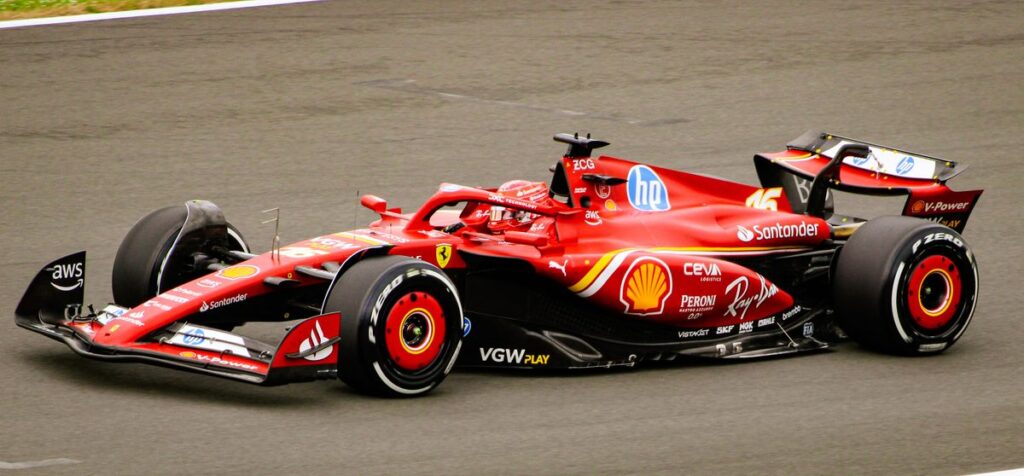
If Antonelli has been the season’s revelation, Lewis Hamilton has been its comeback story. After a difficult start to life at Ferrari, he produced a brilliant outside-line overtake on Max Verstappen for second in Canada, backed it up with another podium at Monaco, and then delivered a maiden win for the team in Spain, his first Grand Prix victory in nearly two years. An aggressive three-stop strategy and a well-timed virtual safety car played their part, but Hamilton had the pace to beat both Mercedes drivers on merit, leading home George Russell and Lando Norris in the first all-British podium since 1968. Charles Leclerc’s season has been tougher, with retirements in both Monaco and Spain, but Ferrari’s overall trajectory and Hamilton’s renewed sharpness are exactly the form the team needed heading into the European leg of the season.
Genuinely Entertaining Racing Returns
What ties these three races together is the racing itself. The adjusted power unit rules, including the catch-up mechanic designed to stop any manufacturer falling hopelessly behind, have closed the field rather than stretching it out. Mercedes, Ferrari, Red Bull and even midfield teams like Alpine and Racing Bulls have all had moments at the front, and the racing has looked far more like the F1 of old, with drivers pushing hard rather than nursing batteries home. Fans who had grown frustrated with fuel-saving processions earlier this year have noticed the difference, and it is hard to disagree.
FIA And FOM Stumble On Penalties
The one big blemish on this run of races was Monaco’s pit lane chaos. Six drivers were investigated for speeding in the pit lane, an unusually high number given that pit limiters are normally set comfortably under the 60 km/h limit. The actual cause, as explained in a recent breakdown by motorsport YouTuber B Sport, was a flawed time-loop measurement at the pit entry: because drivers cut the corners at the start and end of the pit lane, they covered a shorter distance than the system assumed, which pushed their calculated average speed above the limit even though no car was ever genuinely speeding. That is a timekeeping failure on the FOM side, not a driving error, yet it cost Pierre Gasly a likely podium and triggered a communication breakdown at Mercedes that turned George Russell’s race into a write-off.
What happened next made things worse. The stewards controversially overturned Gasly’s two penalties after a review request from Alpine, reinstating a podium he was never really entitled to in a world without the timing error. Russell and Piastri, who had already served penalties built on the same flawed data, were left worse off for having complied. McLaren and Red Bull have since appealed the reversal, and Mercedes pursued its own review for Russell before withdrawing it. As Autosport’s Filip Cleeren put it, the only real winners from this saga are the lawyers, and it sets an awkward precedent for how future penalties might be contested.
It is a strange contradiction for the sport to be in: the racing on track has rarely been better, but the credibility of what happens off it took a real hit in Monaco. F1 should be enjoying the best storylines it has produced in years. Instead, it is once again explaining itself to a paddock that no longer fully trusts the numbers on the timing screens.
Key Takeaways
- Kimi Antonelli has won five of the season’s first six races and leads the championship by a commanding margin at just 19 years old.
- Lewis Hamilton’s maiden win for Ferrari in Spain, backed by two earlier podiums, marks a genuine return to form after a difficult start at the team.
- The reworked power unit and catch-up rules have produced closer, more entertaining racing across multiple teams, addressing concerns raised earlier this season.
- A flawed pit lane speed-trap measurement in Monaco wrongly penalized several drivers, and the inconsistent handling of the fallout has damaged trust in F1’s stewarding process.
- Appeals from McLaren, Red Bull and Mercedes over the Monaco penalty saga remain unresolved heading into the Austrian Grand Prix.
Further reading: Autosport’s analysis of F1’s Pandora’s box of penalties and power units, and B Sport’s video breakdown of how penalties destroy motorsport.
Photo: Samuel Phillips via Pexels